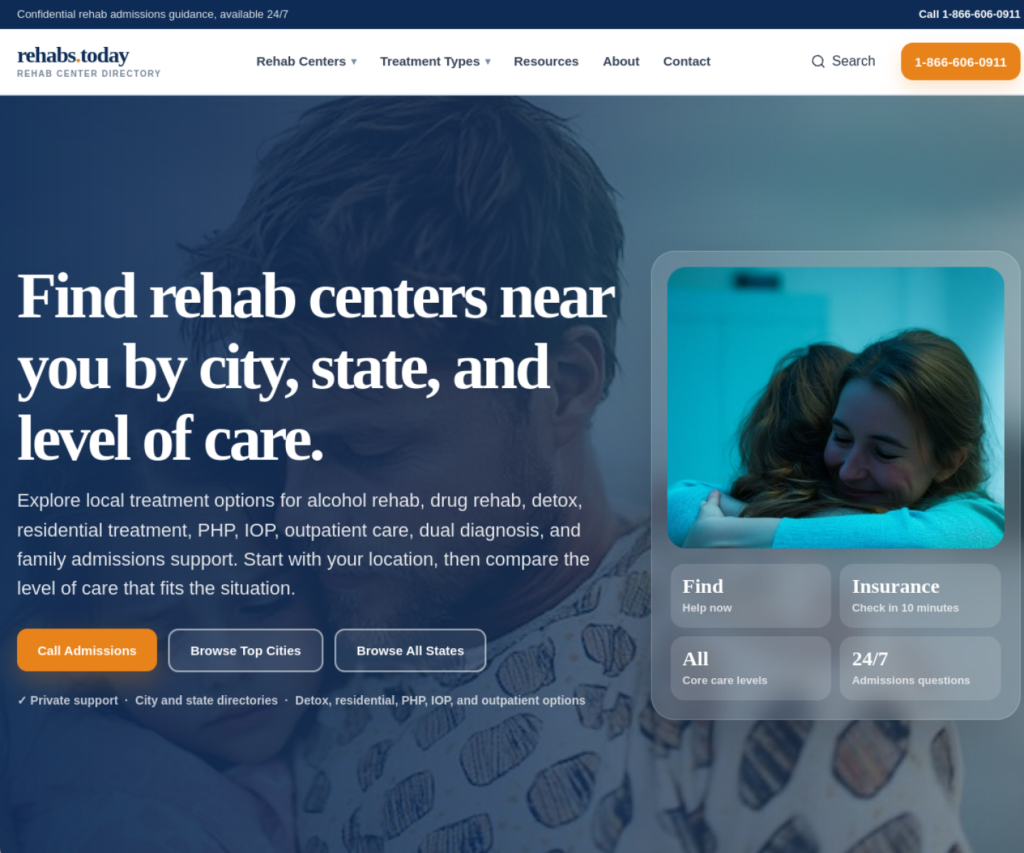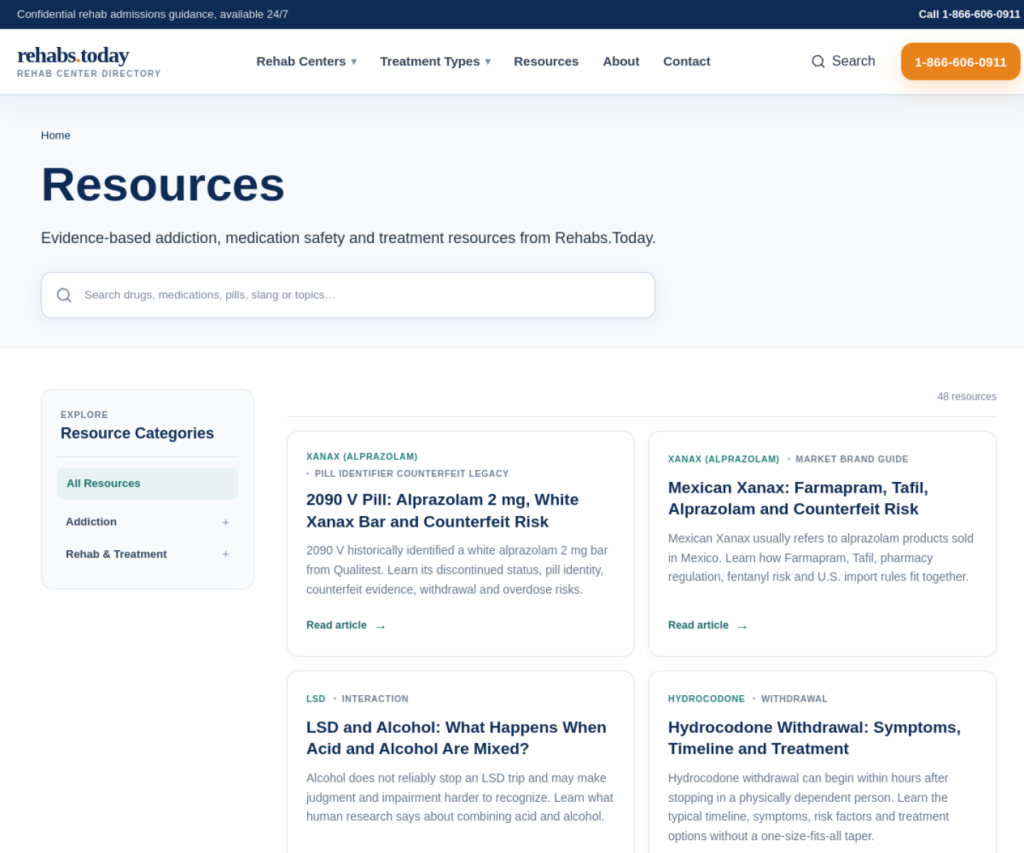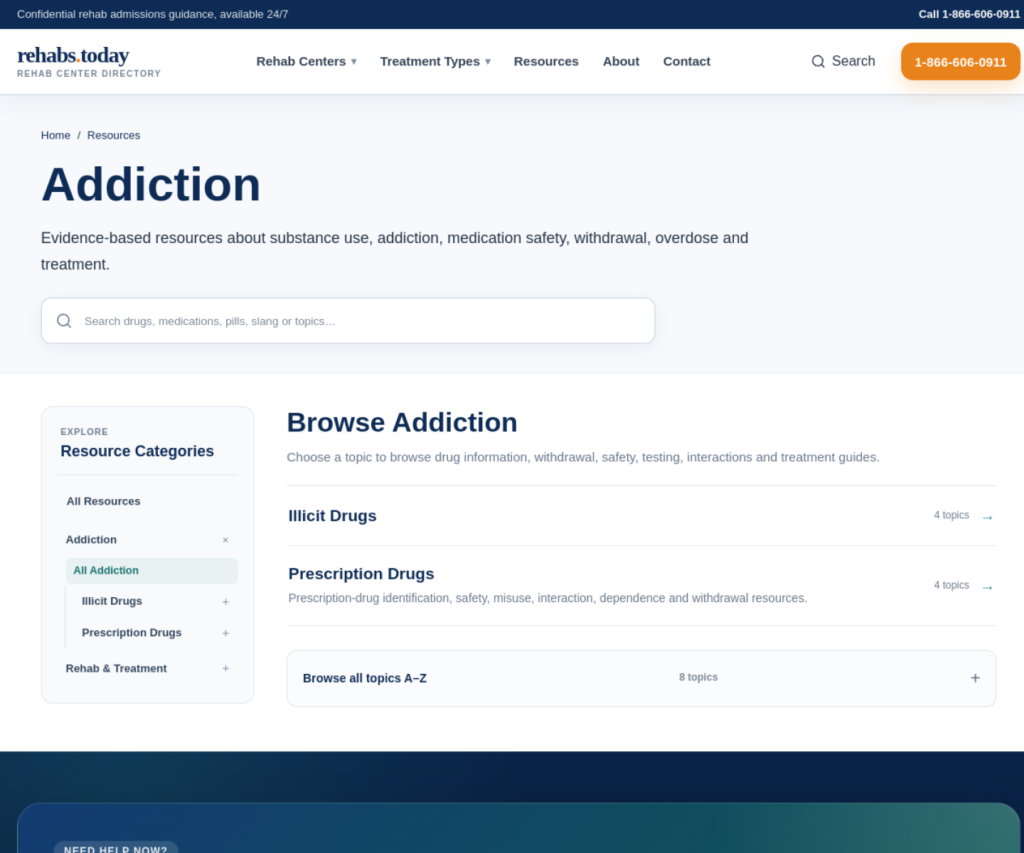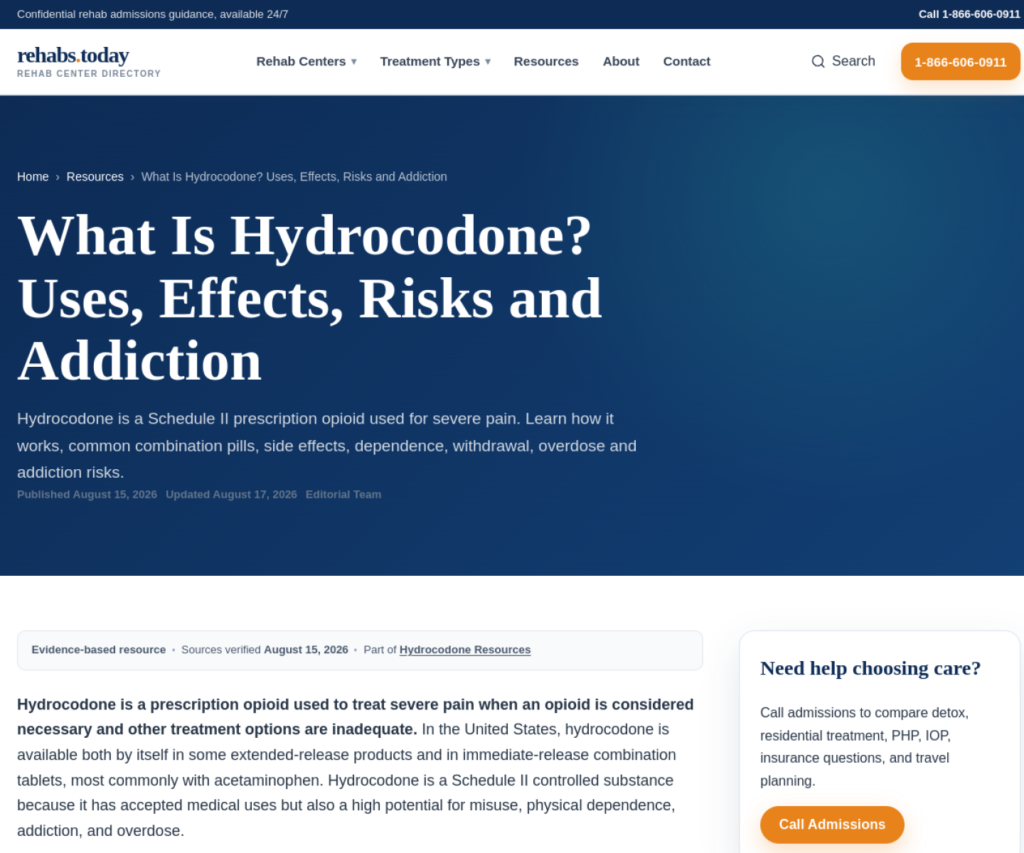
Rehabs.Today is my most comprehensive integration of website development, editorial production, SEO, and information architecture to date. It grew out of a problem I kept encountering while writing substance-use content: individual articles could be useful on their own, but maintaining a clear internal reference system across related substances, topics, questions, and treatment subjects became increasingly difficult as the library grew.
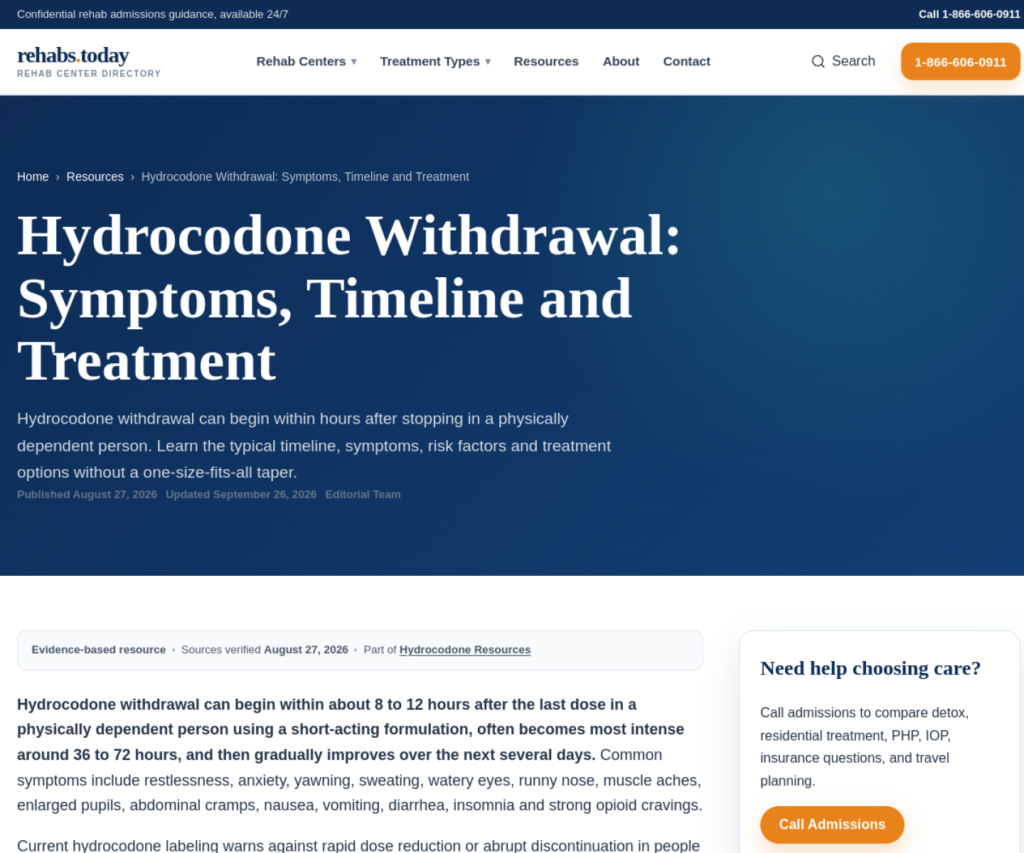
For Rehabs.Today, I designed and implemented a dedicated hierarchical content structure to solve that problem. Broad resource categories connect to drug classes, individual substances, and the articles associated with them. Related resources can therefore sit within a meaningful subject structure instead of functioning as isolated blog posts. The system creates clearer internal relationships between substance guides, withdrawal content, detection information, comparisons, safety topics, treatment resources, and other closely related subjects.
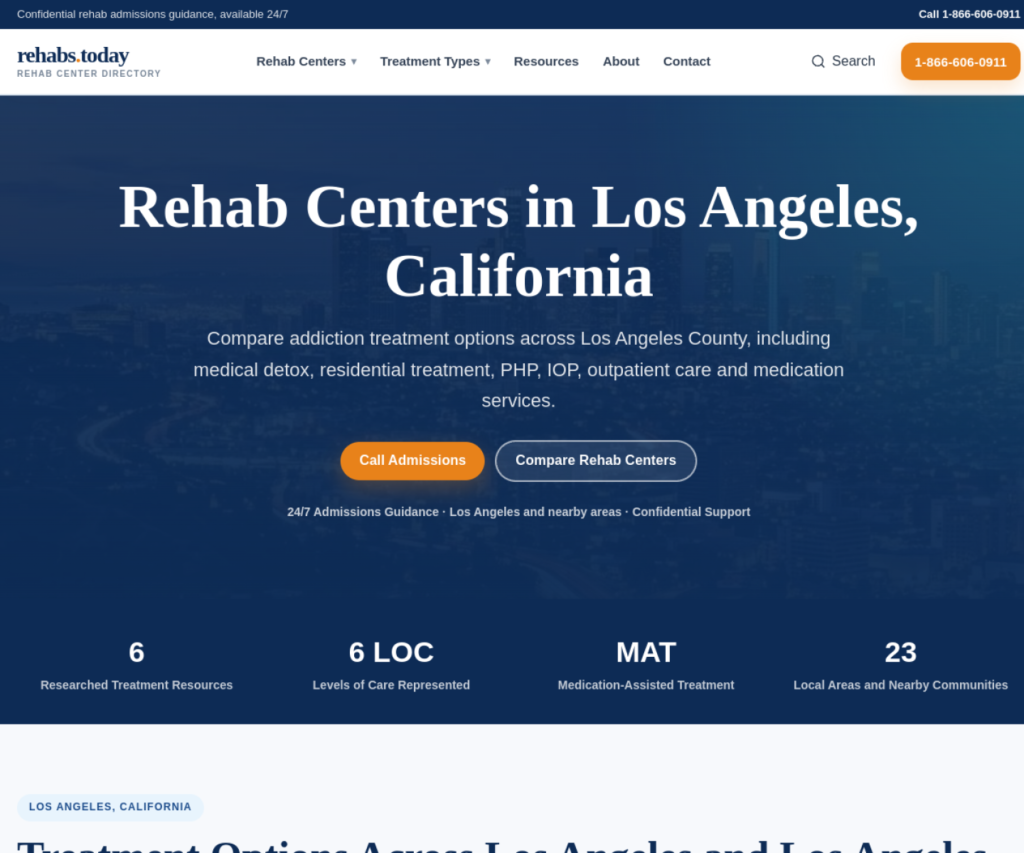
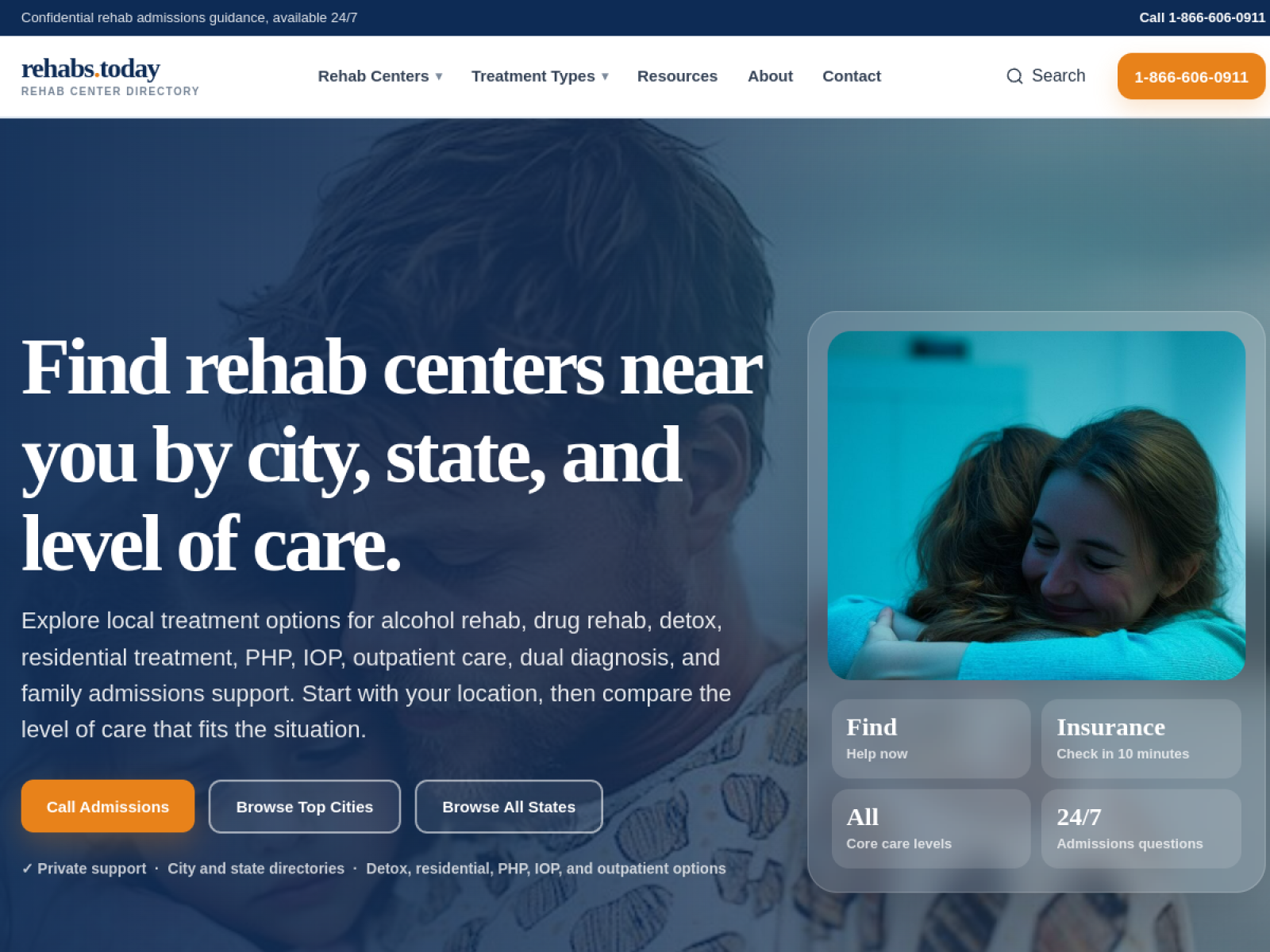
The project combines logo design, website design, WordPress development, SEO strategy, research, and editorial production. I built the site so its educational resource library and treatment-location directory operate as connected parts of the same platform: visitors can research a substance or treatment question, understand levels of care, and move into location-specific treatment research without the content architecture breaking apart as the site expands.
I also developed location-specific page research tools for deploying new state and city pages. These support the research and structuring of local treatment information, nearby communities, levels of care, and researched treatment resources before new location pages are published. The result is a reusable publishing system for both editorial expansion and geographic expansion, rather than a collection of manually disconnected pages.